Amir Friedrich · 6 October 2026
Adapting Cloud-Based Note Systems for Managing Multilingual Documentation in International Business Teams
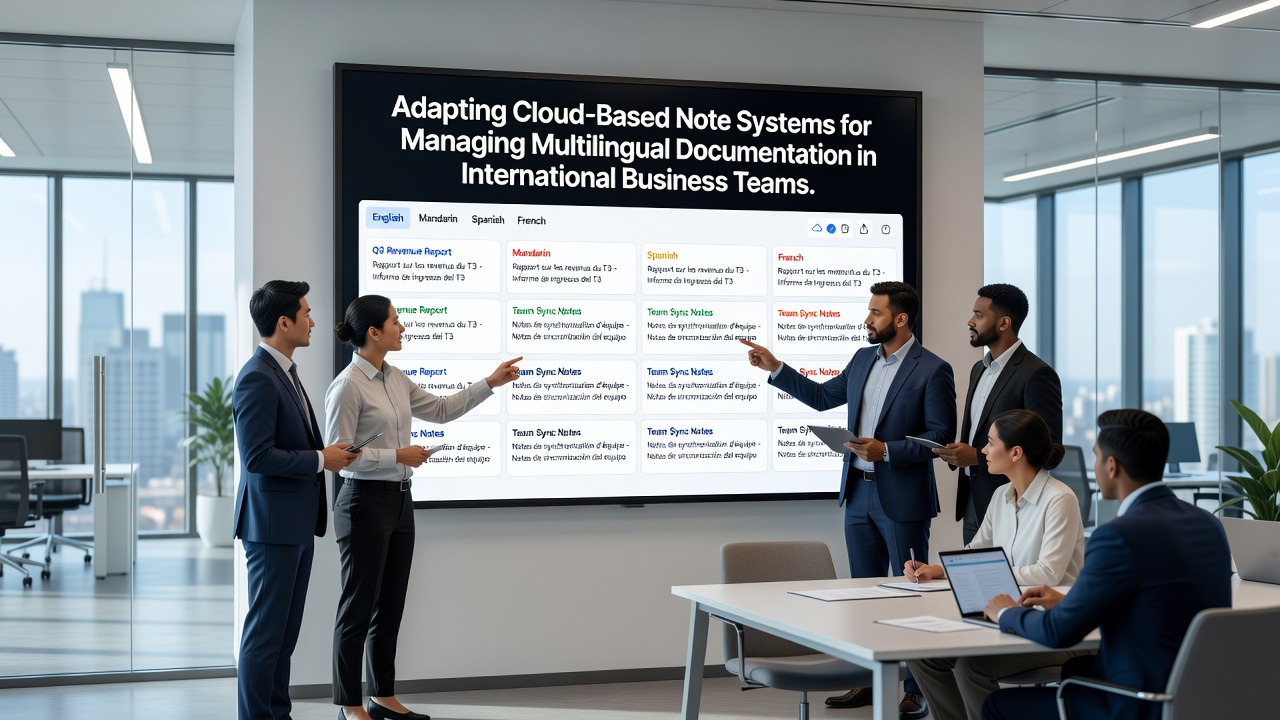
International business teams rely on cloud-based note systems to keep documentation synchronized across time zones, languages, and regulatory environments, yet the core challenge remains consistent translation accuracy combined with real-time collaboration features that preserve context. Research from multiple regions shows that companies operating in more than five languages experience a measurable increase in revision cycles when note platforms lack built-in language detection and version control that tracks changes in both source and target languages simultaneously.
Current Landscape of Multilingual Requirements
Global teams handle documentation that must meet local language mandates while remaining accessible to headquarters staff who may only work in one primary language, and data from the European Commission indicates that cross-border projects now generate documentation in an average of seven languages per initiative. Cloud note platforms address this by integrating machine translation APIs that update automatically when new content appears, yet observers note that these integrations succeed only when they preserve formatting, embedded tables, and comment threads without breaking during language switches. In October 2026 several major platforms released expanded support for bidirectional script handling, allowing teams to edit Arabic and Hebrew notes alongside Latin-based languages without manual reformatting.
Technical Adaptations for Seamless Integration
Teams adapt existing cloud note systems through layered approaches that combine automated language tagging with human review checkpoints, and studies from academic institutions demonstrate that hybrid workflows reduce mistranslation incidents by routing flagged segments to bilingual reviewers before final publication. Platforms achieve this by embedding language metadata at the paragraph level rather than the document level, which lets search functions return results in a user's preferred language even when the original note exists in another. Those who have implemented such systems report that API connections to external translation services must include custom glossaries specific to industry terminology, otherwise technical terms drift across repeated updates. Security protocols also require adjustment because translated versions often travel through additional servers, triggering extra encryption layers under frameworks such as those outlined by the National Institute of Standards and Technology.
Collaboration Features Across Language Boundaries
Real-time co-editing becomes more complex once multiple languages coexist in the same note, and platform developers have responded by introducing language-specific cursors and comment filters that allow users to focus on their assigned language section without seeing constant updates in other sections. Research indicates that when teams configure permission settings by language rather than by entire document, version conflicts drop significantly because contributors cannot overwrite sections they lack authority to modify. Notifications can also be localized so that each team member receives alerts in their working language, which maintains engagement without forcing everyone to monitor a single dominant language feed.
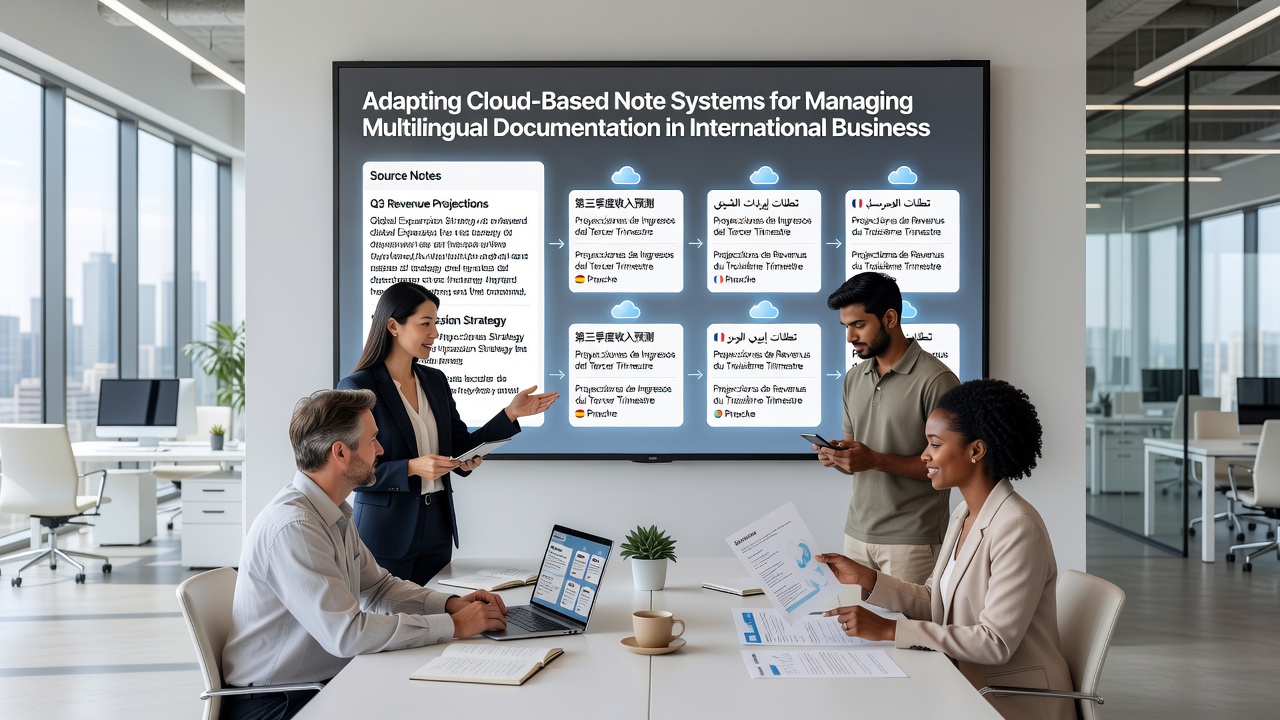
Some organizations further adapt their systems by creating mirrored note structures where a master note in one language automatically generates parallel notes in required languages, and changes propagate only after approval workflows complete. This method proves especially useful for compliance documentation that must appear in official languages of each operating jurisdiction while maintaining a single source of truth for audit purposes.
Data Governance and Regional Compliance
Multilingual documentation stored in cloud notes must satisfy varying data residency rules, and organizations reference guidelines from bodies such as the European Commission alongside standards from Canadian and Australian regulators to determine where translated versions may reside. Access logs become critical because language-based permissions add another dimension to audit trails, requiring platforms to record not only who viewed a note but also which language version they accessed. Teams that map these requirements early in system configuration avoid later rework when new markets introduce fresh language obligations.
Training and Change Management Practices
Successful adaptation depends on training programs that teach staff how to use language tools without disrupting existing workflows, and internal case studies reveal that short modular tutorials delivered inside the note platform itself achieve higher completion rates than separate training portals. Supervisors often assign language champions within each regional team to handle initial setup and ongoing troubleshooting, which distributes expertise and reduces reliance on central IT support. Over time these champions contribute to shared glossaries that improve translation consistency across the entire organization.
Conclusion
Cloud-based note systems continue to evolve in response to the demands of international teams that must maintain accurate, accessible documentation across multiple languages, and the adaptations described here represent practical responses to technical, collaborative, and regulatory realities documented in current research and standards. Organizations that implement layered translation controls, language-aware permissions, and region-specific compliance mappings position their documentation processes to scale without repeated overhauls as new markets and languages enter the picture.