
Klara Krause · 8 September 2026
Strategies for Optimizing Note Organization in Collaborative SaaS Environments
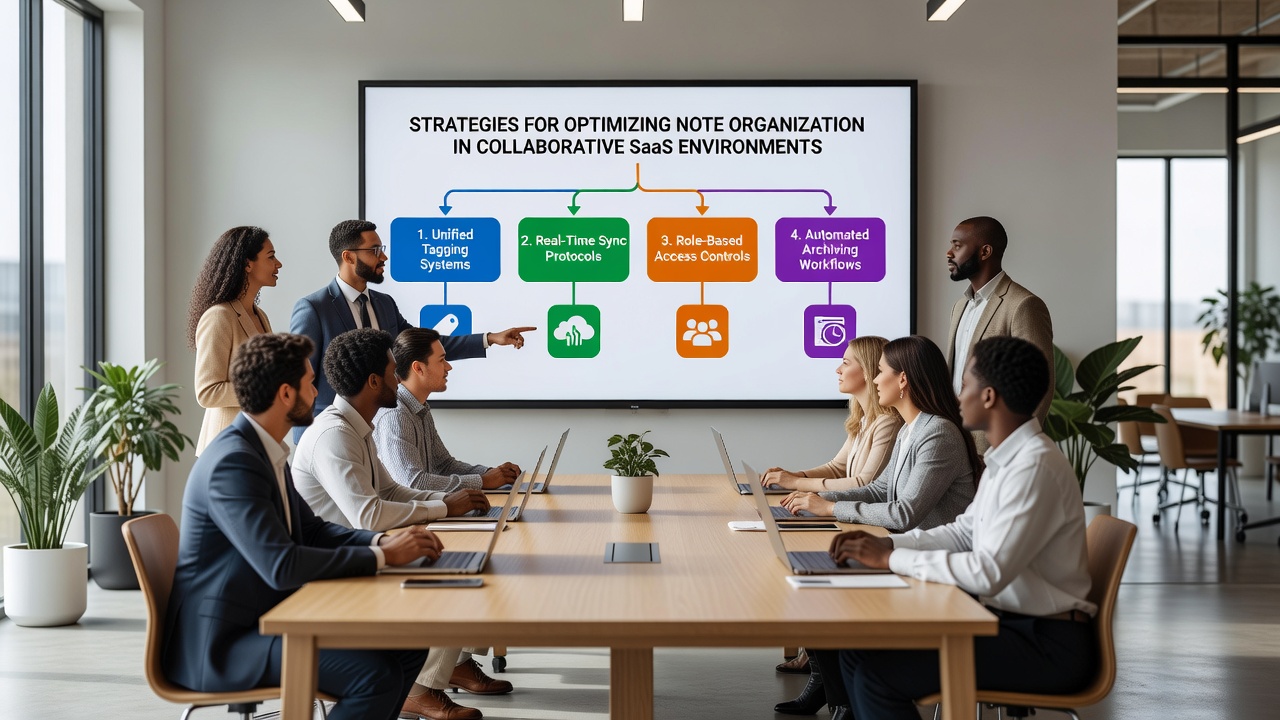
Collaborative SaaS platforms have transformed how teams handle information sharing, yet note organization remains a persistent challenge when multiple users contribute simultaneously. Researchers at the University of Toronto documented in 2024 that disorganized notes lead to duplicated efforts and retrieval delays across distributed teams, while data from the Australian Institute of Digital Collaboration shows structured approaches cut search times by up to 35 percent in enterprise settings.
Teams that establish clear protocols early see measurable gains in productivity, and those protocols often center on naming conventions that everyone follows without exception. A consistent system might combine project codes, dates, and keywords so files sort automatically in most platforms, and this approach scales whether a group has five members or fifty. One study from the European Network for Workplace Technology found that groups using standardized prefixes reduced version conflicts by half within the first quarter of adoption.
Building Hierarchical Structures That Scale
Hierarchies provide the backbone for larger note libraries, yet rigid folders alone fail when collaboration intensifies. Observers note that successful teams combine parent folders with flexible tags, allowing notes to appear in multiple contexts without duplication. For instance, a marketing brief might sit under a campaign folder while tagged with budget, timeline, and client names, so stakeholders locate it through whichever path suits their workflow. Data indicates this dual method supports both linear project tracking and cross-functional discovery.
Platforms that support nested tags and custom properties further enhance these structures, and integration with calendar or task tools creates automatic links between related items. By September 2026 several major SaaS providers plan to release enhanced property syncing across workspaces, which could reduce manual updates for teams already managing complex hierarchies.
Leveraging Search, AI, and Version Controls
Search functions have grown sophisticated enough that teams no longer rely solely on manual organization. Natural language queries now surface relevant notes even when keywords vary slightly, and AI suggestions highlight connections users might overlook. Research from the Canadian Centre for Advanced Collaboration reveals that groups trained on advanced search operators locate information 40 percent faster than those using basic keyword entry alone.
Version history serves as another critical safeguard, since simultaneous edits can overwrite valuable context. Most platforms retain detailed logs that allow restoration of earlier states, and teams that review these logs weekly catch inconsistencies before they compound. External audits become simpler when every change carries timestamps and contributor names, satisfying compliance requirements common in regulated industries.
Training Programs and Ongoing Adaptation
Adoption succeeds only when users receive targeted training rather than generic overviews. Workshops focused on real team workflows produce higher retention than abstract tutorials, and peer champions within departments reinforce habits after initial sessions end. Figures from a 2025 industry report by the Nordic Digital Work Institute show organizations that invested in role-specific training maintained 28 percent higher compliance with note standards six months later.
Regular audits keep systems relevant as projects evolve. Quarterly reviews allow teams to retire outdated tags, merge redundant folders, and introduce new categories without disrupting daily access. Those who treat organization as a living process rather than a one-time setup report fewer retrieval failures over multi-year deployments.
Conclusion
Effective note organization in collaborative SaaS environments rests on consistent conventions, layered structures, intelligent search, and continuous refinement. Teams that apply these elements systematically experience fewer duplicated efforts and faster information access, and the same patterns hold across industries and team sizes. As platforms introduce new capabilities through 2026, groups that maintain disciplined practices will integrate those features without rebuilding their entire systems from scratch.